


THE FASCIST FACE OF NEPAL
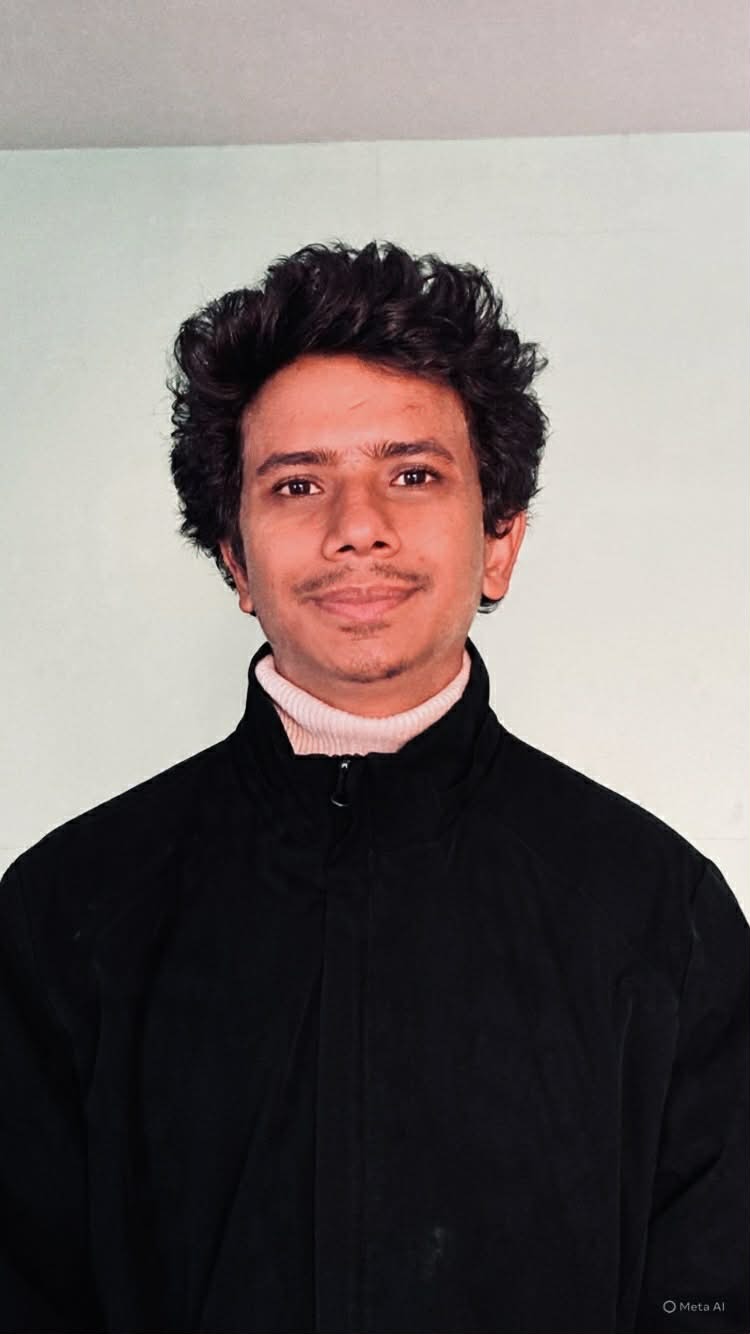


The fascist does not come dressed as a villain. He comes dressed as the solution to the villain before him.
I. The Legitimate Grievance as a Loaded Gun
There is a particular cruelty in the way populist authoritarianism begins not with a lie, but with the truth. This is what makes it so difficult to resist, and so easy to misread. When Hitler stood before crowds in the early 1930s and described the humiliation of Versailles, the economic ruin of ordinary Germans, the corruption of the Weimar establishment he was not fabricating. The grievances were real. The anger was earned. What he manufactured was not the wound, but the cure.
Mussolini operated by the same logic in post-war Italy. Liberal democracy had failed to deliver the territories Italians believed they were promised after the First World War. The parliamentary system was gridlocked, scandal-ridden, and visibly incapable of governing. Mussolini did not need to convince Italians that the system was broken. He only needed to convince them that he and only he could fix it.
This is the first and most important stage of the playbook: you do not invent the crisis. You inherit it, amplify it, and attach your name to it so completely that the crisis and your candidacy become inseparable in the public mind.
Nepal handed Balen Shah this gift on a silver platter. The political landscape he entered was not merely imperfect it was openly, almost theatrically corrupt. Decades of the same parties recycling the same faces. Leaders who switched allegiances not on principle but on arithmetic whichever coalition guaranteed a ministry. The Mahara scandal. The normalisation of impunity. A generation of young Nepalis who had watched their parents’ faith in democratic institutions curdle into exhausted cynicism.
By the time Balen appeared on the scene, the public did not need to be persuaded that the old order was rotten. They had been living inside that rot for their entire lives. His genius and it is a form of genius, however dangerous was in understanding that in such an environment, you do not need to be great. You only need to be legible. To point at the disease with enough conviction that people trust you to be the cure.
The grievances he channelled were real. That is precisely the trap. When the anger is justified, the one who names it most loudly inherits its energy. And once that energy is yours, it does not ask where you are taking it.
II. The Alchemy of Ordinary Into Extraordinary
Mussolini drained a swamp. Hitler built the Autobahn. Both were real things. Both were, in isolation, legitimate functions of government. Both were packaged, through relentless media management, as civilizational achievements proof that the strong man had arrived where the weak democrats had failed.
Balen Shah managed to keep the city clean. He repaired footpaths in Kathmandu. He showed up to construction sites in his work clothes and posted the photographs. These are good things. Repaired footpaths are a good thing. Any honest assessment of his tenure as Mayor of Kathmandu must acknowledge this.
But acknowledgment is not the end of analysis. It is the beginning.
The work itself was perhaps twenty percent of the political product. The performance of the work the social media cycle, the curated footage, the before-and-after imagery, the carefully constructed image of a competent, hands-on, no-nonsense administrator amid a sea of corrupt do-nothings was eighty percent. And it is the eighty percent that tells you what you are dealing with.
The fascist, properly understood, is above all a media phenomenon. He understands, with an intuition that outstrips most democratic politicians, that modern governance is also a story. That what people remember is not the policy document but the image. Not the budget line but the photograph. Mussolini was obsessed with how he appeared in newsreel footage he reviewed and approved footage before it was shown publicly. Hitler’s relationship with Leni Riefenstahl produced some of the most effective political propaganda in recorded history. The mechanism is the same whether the medium is 1930s cinema or 2020s Instagram.
The work is real. The mythology built around it is the product. And the mythology is what you are really being asked to buy.
When ordinary municipal administration is packaged as historic transformation, something important happens in the public mind: the bar for what counts as legitimate criticism is raised impossibly high. To question the Mayor becomes to question the clean river. To ask hard questions about governance becomes to prefer the old, broken system. This is not an accident. It is the designed effect.
III. The Gen Z Gambit: Provoking What You Will Not Defend
Both Mussolini and Hitler understood that young people are the most combustible political fuel available. They are idealistic. They are furious. They have not yet developed the scar tissue of repeated disappointment that makes older generations cautious. And they are willing to put their bodies on the line in ways that middle-aged political operators are not.
Neither Mussolini nor Hitler wanted to lead youth movements openly in their early phases. They wanted to direct them from a safe distance to be the inspiration, the symbolic figurehead, the man whose name was on the lips of the protesters while retaining enough deniability to escape accountability if the movement was suppressed or turned violent.
The pattern attributed to Balen Shah and the Gen Z protest movement in Nepal follows this template with uncomfortable precision. The energy of young people, their genuine frustration with a system that had offered them nothing but broken promises, was a resource. It was mobilized. It was pointed. And when the investigation came when someone needed to account for what had happened, who had organized what, who had encouraged whom the distance between the figurehead and the movement became suddenly, conveniently, very wide.
‘I was not part of it.’ This is not cowardice. It would be almost admirable as cowardice at least cowardice has shame attached to it. What this is, is strategy. You claim the emotional dividend of the uprising. You let the energy of young bodies and young voices do the work of making you seem like the embodiment of change. And then you let those young people absorb the legal and social risk, while you step back into the clean light of plausible deniability.
The question that must be asked and that Nepal’s media and civil society has not asked loudly enough is this: what does it mean to provoke a protest you are unwilling to defend? What is owed to the young people who were mobilized, who marched, who perhaps sacrificed something, in the name of a change whose primary beneficiary turned out to be a politician who would not stand beside them when the reckoning came?
IV. Empathy as Electoral Weapon
The election is, in some ways, the easiest part of the process. When the opposition has already destroyed its own credibility over decades of visible corruption, you do not need to be great. You need to be different. You need to be legible as an alternative. The bar is low because the competition has spent years lowering it.
Balen wore no tie. He spoke plainly. He was young, technically educated, an engineer rather than a lawyer or party apparatchik. He had no obvious family dynasty behind him. In a political culture saturated with dynastic entitlement and professional politicians who had never held a job outside of politics, this alone was remarkable enough to generate genuine popular enthusiasm.
But there is something worth examining carefully in the emotional register of his campaign. Empathy the capacity to make people feel seen, understood, reflected is not the same as integrity. This is one of the most important and consistently overlooked distinctions in democratic politics.
Hitler was known, among those who met him, for his capacity to make individuals feel that they were the only person in the room. He wept in public. He was photographed with children and dogs. He cultivated the image of a man who felt what ordinary Germans felt, who suffered what they suffered, who wanted what they wanted. This emotional authenticity or rather, this emotional performance of authenticity was one of his most effective tools.
Empathy, deployed strategically, is among the most powerful instruments of manipulation available to a political figure. It bypasses the analytical mind and speaks directly to the gut. It creates a sense of personal relationship between the voter and the candidate that no policy platform can replicate. And once that relationship is established, it is extraordinarily resistant to counter-argument. You cannot reason someone out of a feeling.
The public empathy Balen generated during his election campaign was real in the sense that people genuinely felt it. Whether it accurately reflected his values and intentions is a different question and one that his subsequent conduct in office has begun to answer.
V. The Media Silence Strategy
A free and adversarial press is the primary institutional check on executive power in a democracy. Not because journalists are heroic (though some are), but because the structure of accountability journalism asking questions the powerful would prefer not to answer, in public, for the record creates a friction that limits the distance between what is claimed and what is true.
The classic authoritarian move is not to destroy the press immediately. That comes later, if it comes at all. The early move is to bypass it. To create an alternative information environment social media, direct-to-supporter communication, controlled press releases and photo opportunities in which the political figure is always the author of his own story. Always the hero of his own narrative. Always the one who controls what question is asked, what image is seen, what moment is remembered.
Balen Shah has been notably, pointedly reluctant to face unscripted media scrutiny. Press conferences where journalists can ask follow-up questions. Interviews where a skilled questioner can push on inconsistency. These are the mechanisms through which democratic accountability is exercised and they are precisely the mechanisms that have been avoided.
When you communicate exclusively through curated social media, you are never wrong. When the framing is entirely in your hands, you are only ever the competent administrator, the hard-working public servant, the visionary leader surrounded by lesser minds. The journalist who asks the inconvenient question never gets to ask it twice if you never agree to sit in that chair again.
This is not unique to Nepal. It is a global phenomenon. But it is worth naming clearly: a politician who refuses to face unscripted public questioning is a politician who does not believe that the public deserves to know what they would say under pressure. That is not transparency. It is a performance of transparency which is something quite different.
VI. Nepotism: The Mask Removed
This is where the historical parallel stops being merely theoretical and becomes concrete, verifiable, and damning.Balen Shah built his political identity on a specific promise: that he was not like them. The corruption, the cronyism, the appointment of friends and family members to positions of power that they had not earned this was the disease, and he was the antidote. This was not a minor part of his platform. It was the core of it. It was the reason a generation of young, educated, frustrated Nepalis invested their hope in him.
Kumar Banjankar as chief advisor. Kumar Banjankar’s brother appointed as advisor to the sports ministry.These are not minor lapses. These are not difficult judgment calls where reasonable people might disagree. These are the straightforward installation of personal associates in positions of institutional power, by a man who promised, explicitly and repeatedly, that this is precisely what he would not do.
Mussolini promised to replace the corrupt liberal class with a new, efficient, meritocratic elite. Within a few years of taking power, the new elite was simply his loyalists, his old squadristi comrades, the men who had been with him from the beginning. The institution changed its uniform. The logic remained identical. The promise of reform became the cover story for the installation of a new patronage network.
The appointments of the Banjankar network are not a scandal in the ordinary political sense the kind of thing you note, criticise, and move on from.They are a revelation. They reveal that the anti-corruption platform was not a set of values. It was a strategy for winning. Once winning was accomplished, the values were no longer necessary.
When a politician breaks the promise that was the entire reason for their existence, it is not a failure. It is a disclosure.
VII. The Dispensable Poor: Demolition Without Shelter
There is a particular test of a leader’s character that does not come from how he treats his enemies, or his rivals, or the press. It comes from how he treats the people who have nothing. The people who cannot fight back. The people whose suffering will not trend on social media because they do not have social media, because they do not have homes.
The demolition of Sukumbasi Basti informal squatter settlements housing some of Kathmandu’s most economically marginalised residents without the prior arrangement of alternative shelter is not a bureaucratic oversight. It is a choice. And the choice tells you something that no amount of curated Instagram footage can erase.
Mussolini, too, demolished. His urban renewal of Rome the sventramenti, the great clearances tore through the old working-class neighborhoods of the city in the name of ancient grandeur and modern efficiency. The people displaced were not given new homes. They were given rubble, and distance. What remained was the photograph: the dictator standing before the newly revealed ruins of imperial Rome, framed as the restorer of civilization. What did not remain in the photograph were the families who had lived in the demolished buildings.
This is the logic at work in Kathmandu.The clean city is a real thing. But a clean city that achieves its cleanliness by removing the poor from sight without asking where they will go, without providing what they need to go somewhere is not a clean city. It is a managed aesthetic. The dirt has not been cleaned. It has been relocated to somewhere the camera does not follow.
The Sukumbasi are, almost by definition, the people the old political class also failed. They did not arrive at the riverbanks and the roadside settlements because they preferred it. They arrived there because the formal economy, the formal housing market, the formal state, had no place for them. To demolish their shelter without replacing it is not reform. It is the continuation of the same abandonment under a different brand.
What makes this particularly significant in the context of this essay is the dissonance. A politician whose entire claim to power rests on the idea that he is different that he sees the people the old order ignored, that he is building a Kathmandu for everyone, not just the connected and the comfortable should be the last person to bulldoze the homes of the city’s most vulnerable residents at dawn without a transition plan. The contradiction is not incidental. It is diagnostic.
Authoritarianism, in its early and middle phases, does not announce itself as cruelty. It announces itself as order. Efficiency. The city must be made to function. Standards must be maintained. Rules must apply to everyone. These are not inherently wrong ideas. But rules applied selectively, efficiency purchased with the suffering of those least able to resist, order imposed on the powerless while the powerful remain comfortable this is not governance. This is performance of governance, at the expense of the people who were supposed to be its beneficiaries.
The Sukumbasi who lost their shelter did not lose it to a corrupt party politician trading in patronage. They lost it to the man who promised to end exactly that kind of dispensability. That is not an improvement. That is the same wound, administered by a different hand, with better lighting.
Conclusion: The Trap of the Lesser Evil
It would be easy, to conclude that the argument is simply anti-Balen. It is not. Or rather, it is anti-Balen only in the way that it would have been anti-Mussolini in 1923 at a moment when the destination was not yet fully visible but the direction was already clear.
The deeper argument is about a structural vulnerability in democratic systems particularly those that have been badly wounded by sustained corruption and institutional failure. When the established parties have so thoroughly destroyed their own legitimacy, they create the conditions for the dangerous outsider. They lower the bar to the floor. And the dangerous outsider does not need to clear a high bar. He only needs to clear the one in front of him.
Nepal’s old political class made Balen possible. This is not an excuse for what he has done and what he appears to be becoming. But it is a necessary part of the analysis.The disease that produced the cure that is also a disease.
The young people who put their energy, their hope, and in some cases their bodies on the line for change in Nepal deserve better than this analysis. They deserve to have their intelligence respected which means being told clearly what the pattern is, what has happened before when this pattern was followed, and what remains to be decided.
The pattern is not destiny. It is a warning. The institutions that remain the press, the judiciary, civil society, political opposition still have the capacity to create accountability if they choose to exercise it. The question is whether they will do so before the institutions themselves are weakened to the point where the question becomes moot.
By the time the pattern is fully visible, it is often too late to act on it easily. That is the final lesson of the historical record.The time to name the playbook is when it is still being run, not after the final act has been performed.


Related Content

Estrategias avanzadas para ganar en Winpot Casino y ver detalles
Descripción Breve de Winpot Casino Winpot Casino se ha consolidado como una de las plataformas líderes en el sector...
Shorts – The Epitome of Comfort and Style
It is important for everyone to wear garments which they feel great in, such as garments that happen to...
Depop Prada Resale Analysis Exclusive Lookbook Drop
As a fashion critic with a full decade covering Milan’s catwalks and crafting editorials for the leading fashion publications,...
Casablanca Clothing Travel Spirit Trending New Arrivals
Where Paris High-End Fashion Meets Tennis Heritage Casablanca Paris was built on the belief that the most elegant occasions...