


Trump Softens Trade Stance Toward India After Diplomatic Reset
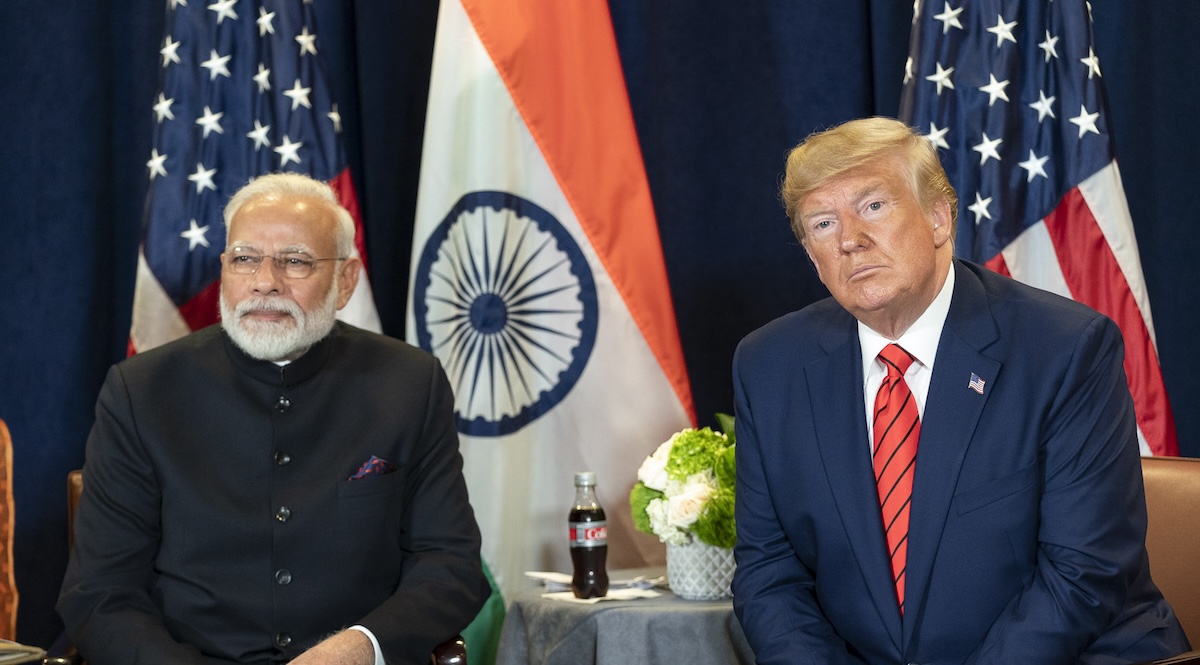


US President Donald Trump, who had adopted an aggressive policy toward India during his second term, has ultimately moved toward a trade reconciliation with New Delhi. The decision came after a phone conversation with Indian Prime Minister Narendra Modi earlier this February.
Following the call, Trump announced a sharp reduction in tariffs on Indian goods, cutting the total customs duty from 50 percent to 18 percent.
Previously, at the end of July, Trump had declared a 25 percent tariff on all imports from India. Later, accusing India of continuing to purchase Russian crude oil despite warnings, he imposed an additional 25 percent tariff, effective from late August. Under Monday’s announcement, the extra 25 percent tariff has been fully removed, and the earlier 25 percent levy has been reduced to 18 percent.
In return, Trump claimed that India agreed to stop buying Russian oil, shift to Venezuelan oil, impose zero tariffs on US products, and import USD 500 billion worth of American goods. However, consistent with Trump’s style, the announcement appears to have been made without detailed groundwork by officials on either side. Apart from the pledge to avoid Russian oil, the commitments—particularly zero tariffs and imports worth USD 500 billion—appear highly unrealistic.
Despite these doubts, the key outcome is that the unusually high tariffs imposed on India, a long-time US partner, have been lowered.
Trump had earlier justified the tariffs by accusing India of indirectly funding Russia’s war in Ukraine through oil purchases. He strongly criticized India for continuing trade with Russia despite humanitarian losses in Ukraine.
However, analysts note that the real reason behind the tariff hike lay elsewhere.
Trump, who has openly expressed a strong desire to win the Nobel Peace Prize, claimed last May that he had mediated to stop the India–Pakistan conflict and even offered to mediate on Kashmir. India, which has long insisted on resolving disputes with Pakistan bilaterally and rejects third-party mediation, denied Trump’s claims and stated that the ceasefire was achieved through direct talks.
Pakistan, on the other hand, formally nominated Trump for the Nobel Peace Prize, crediting him for preventing war. India refused to acknowledge any such mediation, reportedly angering Trump. Feeling deprived of potential Nobel recognition, Trump lashed out at India, making disparaging remarks, including calling India’s economy “dead.”
During this period, the US also appeared softer toward Pakistan. Trump met Pakistani Army Chief General Syed Asim Munir at the White House—an unprecedented meeting for a serving army chief. Trump also claimed that India lost five fighter jets during the conflict and imposed 50 percent tariffs on India, while Pakistan faced only 19 percent.
Personal interests may also have played a role. A cryptocurrency firm launched by Trump’s sons reportedly collaborated with the Pakistani government, which may have influenced his stance. Nonetheless, analysts argue that Trump’s primary grievance stemmed from the Nobel issue.
Prime Minister Modi, who had invested heavily in maintaining good relations with Trump during his first term, was visibly frustrated by the shift. Compared to China’s firm stance toward Trump, India’s position appeared weaker—an embarrassment for Modi, who projects India as a rising global power.
In response, Modi adopted a more calculated diplomatic strategy. He first signaled alternatives by engaging China and Russia during the Shanghai Cooperation Organization summit in late August, meeting both President Xi Jinping and President Vladimir Putin. Images of the three leaders together sent a strong symbolic message to Trump.
However, India recognizes that long-term dependence on China or Russia is not in its strategic interest. With Russia weakened by the Ukraine war and China viewed as a long-term rival, Modi understands that India’s future lies in maintaining strong ties with the United States.
Soon after returning from China, Modi moved quickly to repair relations with Washington. According to Bloomberg, National Security Advisor Ajit Doval was dispatched to the US, where he conveyed India’s willingness to restart trade talks and urged US officials to tone down public criticism. Doval also emphasized that India would not be intimidated and was prepared to wait out Trump’s term if necessary.
Relations gradually improved following Doval’s visit. On September 16, coinciding with Modi’s 75th birthday, Trump called Modi and praised his leadership. Public criticism declined, culminating this week in the tariff reduction.
Notably, the 18 percent tariff on India is now slightly lower than the 19 percent imposed on Pakistan, reflecting Modi’s insistence that India should not be treated worse than its neighbor.
India has also moved swiftly on other fronts. It recently finalized a long-delayed trade agreement with the European Union, and relations with Canada, strained since 2023 over the killing of Sikh leader Hardeep Singh Nijjar, have begun to improve. Both countries, facing pressure from Trump, appear keen to reset ties.
Canadian Prime Minister Mark Carney is expected to visit India in late February, while Brazilian President Luiz Inácio Lula da Silva—also targeted by Trump—will visit India the same month.
Overall, after initially bearing the brunt of Trump’s hostility, Modi has demonstrated diplomatic agility—repairing ties with the US while strengthening relations with Europe and other middle-power nations.
Trending
-
Strong Windstorm Warning Issued for Friday and Saturday
-
Balen Shah to Take Oath as Prime Minister on Chait 13
-
Investigation Committee Formed Over Burning of Xi Jinping’s Book
-
Dahal Warns of Action Against Party Members Who Did Not Vote
-
Iran–Israel Conflict Escalates, Missile Strike on Qatar


Related Content
Impact of Iran Conflict: Crude Oil Prices Rise Above $100 Again
The ongoing conflict involving Iran has caused volatility in global crude oil prices. After a brief dip on Monday,...

Department Warns Against Artificial Gas Shortage Amid High Demand
The Department of Commerce, Supplies and Consumer Protection (Nepal) has warned industries and distributors not to create an artificial...
Wildfires Damage Hundreds of Hectares of Forest Land in Jumla
Wildfires caused significant damage to forest areas in Jumla District during the last fiscal year, destroying about 330.28 hectares...

Gold and Silver Prices Decline Slightly in Nepal on Thursday
Gold and silver prices in the Nepal saw a slight decline on Thursday. The price of gold dropped by...